Charles Rennie Mackintosh
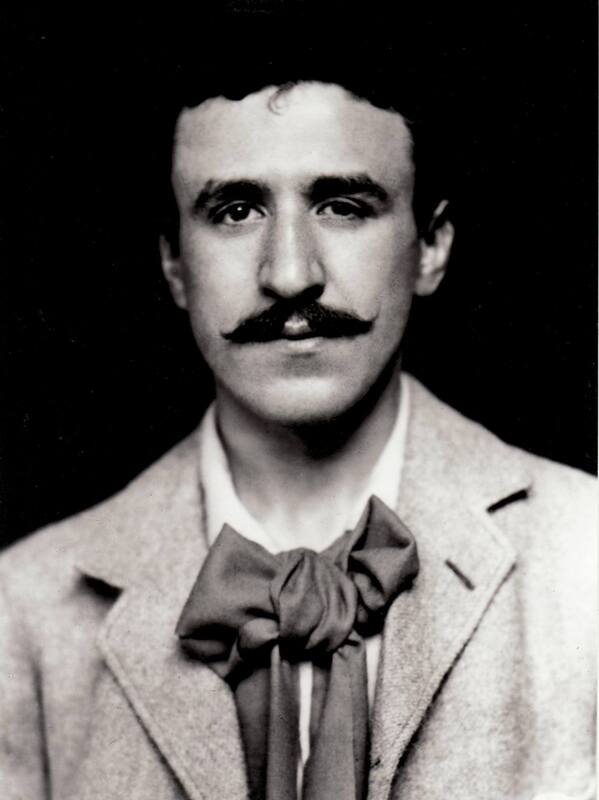
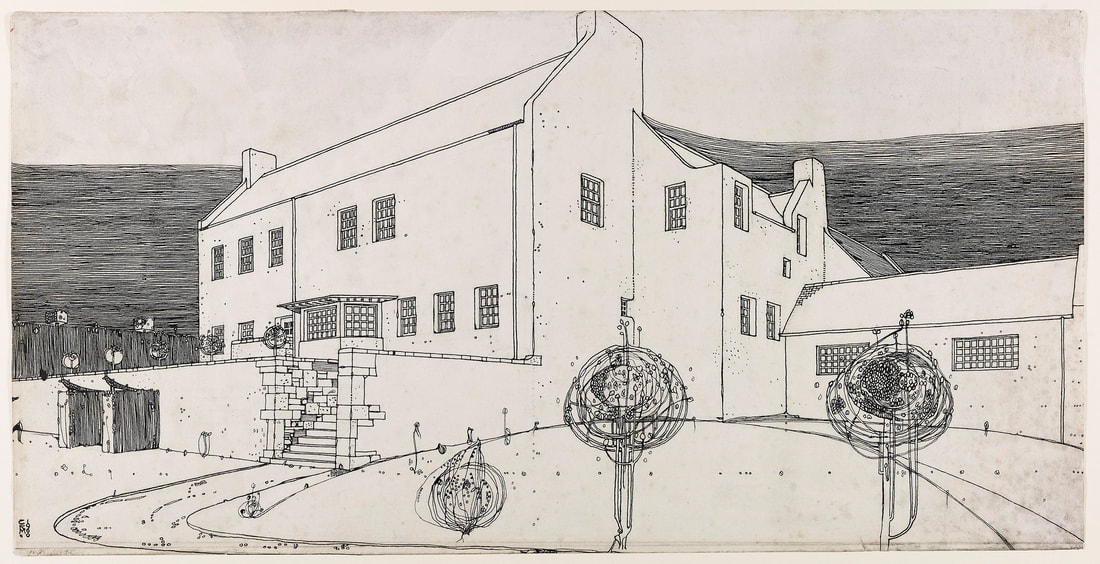
He lived most of his life in Glasgow, which boomed during the industrial revolution. It was one of the most important industrial zones in the world at the time for heavy industrial goods and shipbuilding. It being a larger, more prominent city on the world stage made it react faster by the waves of different art styles which grew in popularity. These include Japanism and developing Modernism. Glasgow was becoming globalized and so Charles Rennie Mackintosh was exposed to many art styles from across the world.
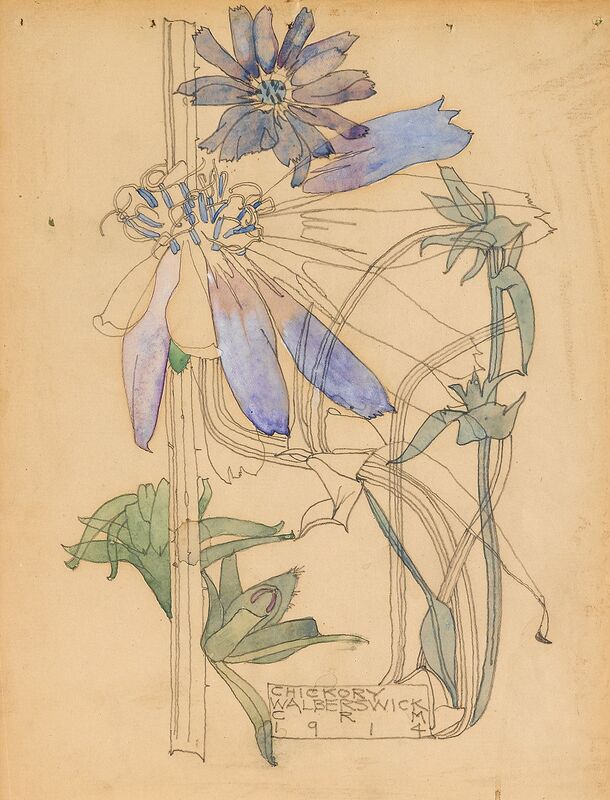
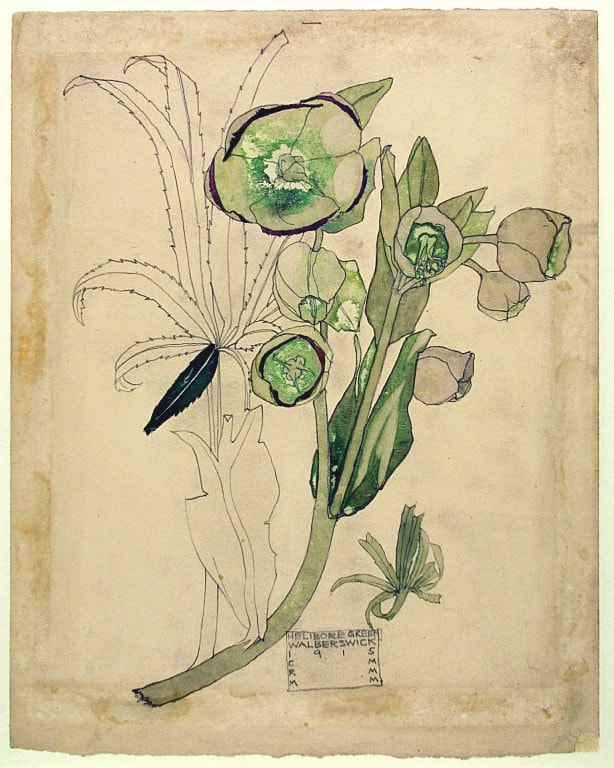
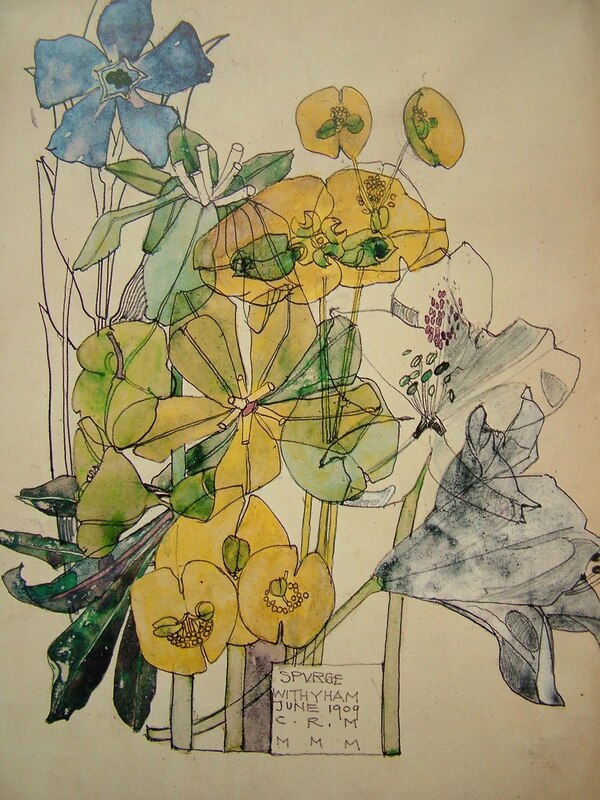
He took influences from his Scottish upbringing and from modernism. But fell away from the bleaker idea of utilitarianism of it, because it felt like something which was for masses, he didn't want to make art for the masses, he wanted art of individuals. Which actually sounds pretty beautiful. So he combined Art Neuvou with ideas from Japanism which simplified the forms with the motive of developing upon the art, instead of reducing it to simplicity for the sake of utility.
He took influences from his Scottish upbringing and from modernism. But fell away from the bleaker idea of utilitarianism of it, because it felt like something which was for masses, he didn't want to make art for the masses, he wanted art of individuals. Which actually sounds pretty beautiful. So he combined Art Neuvou with ideas from Japanism which simplified the forms with the motive of developing upon the art, instead of reducing it to simplicity for the sake of utility.
Josef Franz Maria Hoffmann
Austria-Hungary - Josef Franz Maria Hoffmann
In Austria-Hungary, an art movement called Vienna Secession developed from Art Nouveau . Founded by artists and architects such as Josef Franz Maria Hoffmann
In their manifesto they like Mackintosh mention the importance of individuality. A compromise between a swiss style of architecture known for it's straight lines and strong shapes, but not to the point of ridiculous statues and ornaments made industrially of cement. Some form of happy harmony of the two schools of thought was the idea, and the idea was manifested in the architecture of the Secession Gallery.
Work by Josef Hoffmann after this became more Geometric, But much like Gustav Klimt's Paintings, they had many patterns them which are clearly borrowed from Art Neuvou.
Lack of depth, Large planes of color Dramatic lighting or no lighting at all and the use of gold and off-whites seems to be running themes in lots of the illustrations, paintings and architectural work in this movement.
In Austria-Hungary, an art movement called Vienna Secession developed from Art Nouveau . Founded by artists and architects such as Josef Franz Maria Hoffmann
In their manifesto they like Mackintosh mention the importance of individuality. A compromise between a swiss style of architecture known for it's straight lines and strong shapes, but not to the point of ridiculous statues and ornaments made industrially of cement. Some form of happy harmony of the two schools of thought was the idea, and the idea was manifested in the architecture of the Secession Gallery.
Work by Josef Hoffmann after this became more Geometric, But much like Gustav Klimt's Paintings, they had many patterns them which are clearly borrowed from Art Neuvou.
Lack of depth, Large planes of color Dramatic lighting or no lighting at all and the use of gold and off-whites seems to be running themes in lots of the illustrations, paintings and architectural work in this movement.
Victor Horta
Belgium - Victor Horta
Victor Horta was one of the founders of Art Neuvou. He revolutionized architecture with new and exciting uses of iron and glass in houses borrowed from designs used in greenhouses. his first few designed houses are UNESCO heritage sites. The King Albert I of Belgium made him a Baron for his advancements in the field. The Belgian advancements of Art Nouveau are subtle details to do with wide spaces, diffused lights and decorative lines and less internal ridged geometric shapes. externally in some of his early work he did have fairly plain exteriors but that was only so that the design would fit in with the rest o the buildings on the street. If we look later into Victor's career we see a more confident celebration of his style with curved frames for windows on the entrance doors and the doorway of the Hotel Salvoy.
If I were to point out other artists from the movement from Belgium to string together what makes Belgian Art Neuvou unique it's the warmer tones and subdued color pallets. Such as the poster work of Jan Toorop.
Victor Horta was one of the founders of Art Neuvou. He revolutionized architecture with new and exciting uses of iron and glass in houses borrowed from designs used in greenhouses. his first few designed houses are UNESCO heritage sites. The King Albert I of Belgium made him a Baron for his advancements in the field. The Belgian advancements of Art Nouveau are subtle details to do with wide spaces, diffused lights and decorative lines and less internal ridged geometric shapes. externally in some of his early work he did have fairly plain exteriors but that was only so that the design would fit in with the rest o the buildings on the street. If we look later into Victor's career we see a more confident celebration of his style with curved frames for windows on the entrance doors and the doorway of the Hotel Salvoy.
If I were to point out other artists from the movement from Belgium to string together what makes Belgian Art Neuvou unique it's the warmer tones and subdued color pallets. Such as the poster work of Jan Toorop.
Louis Majorelle
Nancy, France - Louis Majorelle
Nancy France was very much at the heart of Art Neuvou when it came into being so if you look at the architecture of many of the buildings it's very unique, naturalistic and non-geometric. The curves of some of the chimneys and walls make you think of Castles and buildings out of a Disney Film. It looks like something from a fantasy, the curves make you think of a sketch. Louis Majorelle is just one designer and architect of many such creative minds embracing Art Neuvou in that era. his Glass stained windows have the graphic style of art Neuvou but with the shining of light through them do have a lot more color to them than the Belgian style. and the buildings externally are just far more confident and less subdued than the works of Victor Horta. I'd describe the French style as dramatically bombastic, experimental and Brave, but sacrificing the sophisticated subtlety of the Belgian style.
Nancy France was very much at the heart of Art Neuvou when it came into being so if you look at the architecture of many of the buildings it's very unique, naturalistic and non-geometric. The curves of some of the chimneys and walls make you think of Castles and buildings out of a Disney Film. It looks like something from a fantasy, the curves make you think of a sketch. Louis Majorelle is just one designer and architect of many such creative minds embracing Art Neuvou in that era. his Glass stained windows have the graphic style of art Neuvou but with the shining of light through them do have a lot more color to them than the Belgian style. and the buildings externally are just far more confident and less subdued than the works of Victor Horta. I'd describe the French style as dramatically bombastic, experimental and Brave, but sacrificing the sophisticated subtlety of the Belgian style.
Pablo Picasso
Madrid, Spain - Pablo Picasso
Pablo Picasso was influenced by Art Neuvou since it was happening while he was growing up and he went to France when he was young and was immersed into it. It's mainly his blue period that reflects Art Neuvou. where he uses it's wavy lack of rigidity and natural curving lines to get across this wimpy feeling of sadness with even the most straightforward and seemingly harmless of images such as 'musicians with masks'. later on in his career from the 1950s you see a painting of his studio where the studio is clearly in the style of artneuvou. where he's clearly taken the loose lines of the window frames and extrapolated that looseness to the rest of the painting to give it a wavy dreamy feeling. for the most part he was able to iconify Art Neuvou as a dreamy style of sadness from his Blue period and that was the emotional contribution he added to it. in the physical or object-related contribution he made to the movement, I'd say that the fact he made the painting not be about plants and instead solely about people i urban spaces brings a new thematic aesthetic to the movement. away from the usual hippie-esque visuals of floral designs. He tied it more to humans and their surroundings, not just the natural world, he explored pain. He took the style and made it more real and gritty.
Pablo Picasso was influenced by Art Neuvou since it was happening while he was growing up and he went to France when he was young and was immersed into it. It's mainly his blue period that reflects Art Neuvou. where he uses it's wavy lack of rigidity and natural curving lines to get across this wimpy feeling of sadness with even the most straightforward and seemingly harmless of images such as 'musicians with masks'. later on in his career from the 1950s you see a painting of his studio where the studio is clearly in the style of artneuvou. where he's clearly taken the loose lines of the window frames and extrapolated that looseness to the rest of the painting to give it a wavy dreamy feeling. for the most part he was able to iconify Art Neuvou as a dreamy style of sadness from his Blue period and that was the emotional contribution he added to it. in the physical or object-related contribution he made to the movement, I'd say that the fact he made the painting not be about plants and instead solely about people i urban spaces brings a new thematic aesthetic to the movement. away from the usual hippie-esque visuals of floral designs. He tied it more to humans and their surroundings, not just the natural world, he explored pain. He took the style and made it more real and gritty.